Why Do People Stay Poor? 7 Traps That Quietly Keep You Broke
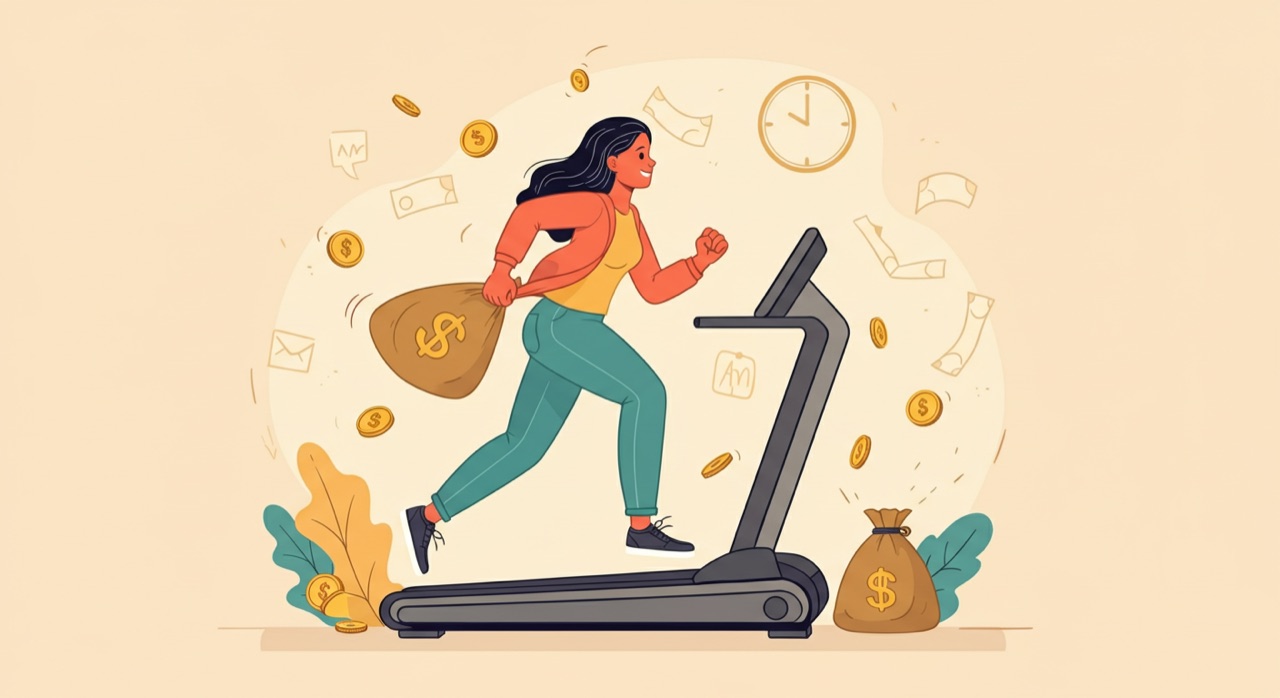
Most people stay poor not because they earn too little, but because of a handful of repeatable traps: doing money steps in the wrong order, carrying high-interest debt, never building an emergency buffer, leaving free employer pension money on the table, paying invisible fees, treating money as taboo, and waiting to invest until they “know enough.” Fix the sequence and most of these dissolve.
- Staying poor is usually about the order you do things, not your income.
- Clear high-interest debt (above ~8–10%) before you invest a penny.
- Build a one-month emergency buffer so setbacks don't become new debt.
- Always take a full employer pension match — it's free money.
- Watch fees: 1% a year can cost six figures over a lifetime.
- Start now with small amounts in low-cost index funds — don't wait to feel ready.
Prefer to watch?
It's usually the order, not the income
Here's the uncomfortable truth: two people on the exact same salary can end up decades apart in wealth. The difference is rarely willpower and almost never a secret investment. It's sequencing — doing the right things in the wrong order.
Investing before clearing a 24% credit card. Chasing a side hustle while ignoring a pension match that doubles your money instantly. Saving into a 0.5% account while inflation quietly eats it. Each feels productive. Together they keep you running hard and getting nowhere.
Trap 1: High-interest debt you're 'managing'
Carrying a balance on a card charging 20–30% isn't a bill — it's a negative investment compounding against you. Paying it off is a guaranteed, tax-free return equal to that interest rate. No stock reliably beats it. Anything above roughly 8–10% interest gets cleared before you invest a penny.
Trap 2: No buffer, so every setback becomes debt
Without even one month of expenses saved, a broken boiler or a slow month becomes a credit card balance — and you're back in Trap 1. A small starter emergency fund isn't glamorous, but it's the wall that stops you sliding backwards every time life happens.
Trap 3: Leaving free money on the table
If your job matches pension contributions and you don't take the full match, you are declining a 50–100% instant return on that money. It is the single best 'investment' most people can access, and millions ignore it because pensions feel distant and boring.
Free 60-second assessment
Not sure where to start? Find out what kind of investor you are.
Take the quiz →Trap 4: Invisible fees
A 1% higher annual fee sounds trivial. Over 30 years it can quietly cost you a six-figure sum in lost compounding. Expensive actively managed funds, high-fee platforms, and 'wealth managers' who underperform a simple index fund are a slow leak in the bottom of the boat.
Trap 5: Money is a taboo, so no one taught you
If you're the first in your family to have money to invest, no one handed you the manual — because there wasn't one. That's not a personal failing; it's the default. Roughly 70% of wealthy families lose their wealth by the second generation because the how was never passed down. The fix is simply learning the system on purpose.
Trap 6: Waiting until you 'know enough' to start
Perfectionism is expensive. The person who invests £50 a month starting today, understanding little, will usually beat the person who waits five years to feel ready. Time in the market does the heavy lifting — and you learn far faster once real money is involved.
Trap 7: Trying to pick winners instead of owning everything
Beginners often gamble on individual hot stocks, lose, and conclude investing is 'not for them.' A low-cost index fund that owns hundreds of companies at once removes the guesswork. And when you do look at individual companies, the smartest starting point is the everyday brands you already understand and buy from.
Frequently asked questions
Is staying poor about income or habits?
For most people it's habits and sequencing, not income. Two people on identical salaries can end up decades apart in wealth depending on the order they tackle debt, emergency savings, pension matches and investing.
What is the single fastest way to stop losing money?
Clear high-interest debt (anything above roughly 8–10% interest). Paying it off is a guaranteed return equal to the interest rate, which almost no investment reliably beats.
How much money do I need to start investing?
You can start with as little as £50 a month in a tax-free account like a UK Stocks and Shares ISA. Starting small and early beats waiting until you feel 'ready.'
Where should a complete beginner begin?
Take a 60-second investor quiz to find your starting point, then follow a step-by-step order: clear expensive debt, build a small emergency fund, capture any pension match, then invest in low-cost index funds.
The Wealth Stack
The complete roadmap — mindset, making money, and investing, in the right order.
Download it free →The step-by-step system
ISA walkthroughs, sample portfolios, and the everyday-brands method. £19 with code LAUNCH.
Get the guide →Read next


Educational content only — not financial advice. Investments can fall as well as rise and you may get back less than you put in. Always do your own research or speak to a regulated adviser before investing.